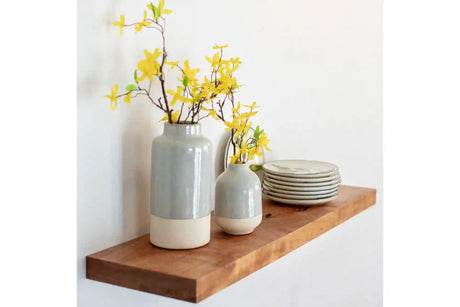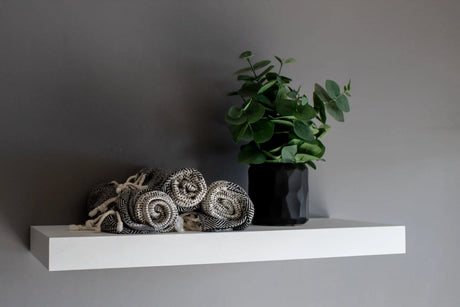

Somewhere between the third bag of single-origin beans, the pour-over setup, the burr grinder, the electric kettle with the gooseneck spout, and the mug collection that stopped fitting in the cabinet two years ago, you realized the kitchen counter isn't cutting it anymore. You need a dedicated coffee station, and you need it on the wall where it's not competing with the toaster for real estate.

Floating shelves for coffee bar setups are one of the most satisfying projects I build for. The footprint is small (usually one wall section or a corner), the result is immediate, and you get to stop digging through a cabinet every morning to find your favorite mug. Here's how to set one up properly.
Start With What's Going on the Shelf
Before you pick a size or a species, inventory your coffee gear. Not what you think you'll put on the shelf someday. What you actually own right now and use regularly.
The typical home coffee bar includes some combination of: a coffee maker or espresso machine (heavy, wide, 10" to 16" deep), a grinder (6" to 8" deep, moderately heavy), mugs (a lot of them, and they multiply), a kettle, canisters of beans, a sugar jar, maybe a frother or an Aeropress or that Chemex you got as a gift and actually use. Some of this goes on the counter. The rest goes on the shelves above it.
The counter handles the heavy, frequently used equipment: the machine, the grinder, the kettle. The shelves handle everything else: mugs, beans, syrups, spare filters, and whatever accessories you've accumulated. This split keeps the workflow functional. You're not reaching above your head for a hot kettle.

Sizing the Shelves
Depth: 8" to 10" for most coffee bar shelves. An 8" shelf holds mugs, canisters, and small accessories comfortably. A 10" shelf adds room for larger items like a French press, a pour-over stand, or a row of syrup bottles. If you're putting the espresso machine on a shelf instead of the counter (some people do, especially with compact machines), go 12" deep. For a full breakdown by use case, the guide on choosing the right depth covers it.
Length: Match the counter or station below. If your coffee bar lives on a 36" section of counter, a 36" shelf above it keeps things proportional. If you've got a wider nook or a dedicated wall, 48" gives you room to spread out. Coffee bars that are built to fit the nook look intentional rather than improvised. Measure the space, order to the exact width, and the shelf looks like it was always supposed to be there.
How many shelves: Two is the sweet spot for most coffee stations. Bottom shelf at 18" above the counter (clears most coffee makers and kettles), top shelf 12" to 14" above that. The bottom shelf holds the daily-use items: mugs you reach for every morning, the bean canister, the sugar jar. The top shelf holds the things you need less often: spare mugs, backup beans, the pour-over filters, the bag of decaf for guests who make questionable decisions.
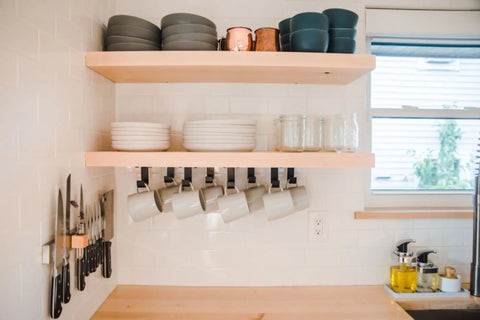
Three shelves works if you've got the wall height and the collection to fill it. But two loaded shelves look better than three half-empty ones. For the exact math on vertical spacing, the spacing between shelves guide walks through it.
The Weight Question
Coffee gear is heavier than people expect. A full canister of beans weighs about 2 lbs. A ceramic mug is around 1 lb. Line up eight mugs, two canisters, a French press, and a jar of sugar on a single shelf and you're at 15 to 20 lbs without trying hard. Put an espresso machine on a shelf and you could be at 30 to 40 lbs on that shelf alone.

Most floating shelf brackets top out at 25 to 30 lbs. That's fine for a few mugs and a candle. It's not fine for a working coffee station where things actually get used. The Hovr bracket holds 150 lbs per stud, so a 36" shelf on two studs handles 300 lbs. You could put everything you own on a single shelf and the hardware would hold the weight without flexing. That kind of headroom means you never have to think about what goes where based on weight. Just put things where they make sense.
Where to Put the Coffee Bar
Kitchen
The most common spot. A section of counter near the sink (for easy water access), with two shelves above. This usually means carving out 24" to 36" of counter space and the wall above it. If you're replacing upper cabinets with open shelving, the coffee bar is a natural starting point. It's a smaller commitment than converting the whole kitchen to kitchen open shelving, and it gives you a feel for whether open shelves work for you before going all in.

Dining Room
If the kitchen is tight, a small table or console in the dining room with shelves above it creates a standalone coffee station that doubles as a serving area when guests come over. Dining room floating shelves at 36" to 48" wide above a narrow table give you a setup that looks like a cafe corner without taking over the room.
Home Office
One shelf above a small table or cart in the corner of the office. This is the "I refuse to walk to the kitchen for my third cup" setup. Home office shelves holding a few mugs, a canister, and a pour-over stand keep the essentials within arm's reach during the workday. Minimal footprint, maximum caffeine efficiency.
Nooks and Dead Corners
That awkward 24" of wall between the fridge and the pantry door. The corner by the back door that's never been used for anything. The gap beside the dishwasher. These are all coffee bar territory. A single shelf, 24" to 36" long, with the machine on the counter below. Some of the best coffee stations I've seen are in spaces people assumed were too small to use.
The Mug Situation
Let's be honest about the mug collection. You have more mugs than a shelf can hold. Every vacation, every gift, every "I saw this and thought of you" mug has been accumulating since your first apartment. There are mugs in the back of the cabinet you forgot you owned.
A coffee bar shelf forces you to pick your favorites. The ones you actually reach for every morning go on the shelf, displayed and accessible. The rest go back in the cabinet or, if you're feeling brave, to the donation pile. Curate the mugs. Your shelf will look better for it.

For hanging mugs under the shelf, screw-in cup hooks on the underside of the shelf work well. Space them 3" to 4" apart. The hooks hold the mugs below the shelf, which frees up the shelf surface for other items and puts the mugs right at grab height. Just make sure whatever is below the hooks has clearance.
Which Species for a Coffee Bar
The wood sets the vibe for the whole station, and coffee bars tend to lean in one of two directions: warm and cozy, or clean and modern.
Walnut is the warm route. Dark, rich grain, looks good next to dark roast in a glass canister. If your kitchen has warm tones, dark countertops, or copper/brass hardware, walnut fits right in.
White oak splits the difference. The grain adds warmth without going dark, and it pairs with almost any counter material or cabinet color. It's the safe pick if you're not sure, and "safe" isn't an insult here because it genuinely works in more settings than any other species.
Maple goes the clean and modern direction. Pale, tight grain, no visual competition with the gear on the shelf. If your kitchen is bright, your counters are white or light gray, and you want the shelf to recede, maple does that.
Add Lighting and the Whole Setup Glows
LED lighting on the underside of the top shelf puts a warm wash of light across the mugs and accessories on the shelf below. On a coffee bar, the effect is somewhere between a cafe and a high-end kitchen showroom. It highlights what's on the shelf, adds depth to the wall, and makes the 6 AM pour-over feel a little less brutal.
I route the LED channel directly into the wood and drill a wire exit through the back. No adhesive strip lighting that peels off after three months. $50 per shelf for the routing, and the result is permanent.
Build Your Coffee Bar
The counter is already drowning in equipment and the mug cabinet stopped closing properly two mugs ago. Time to move it to the wall.
Browse the full bar floating shelves collection for the right species and size. Every shelf is solid hardwood, built to your exact dimensions, and ships with the Hovr bracket at 300 lbs capacity. Pick the wood, measure the wall, and I'll build the shelves. You supply the beans.