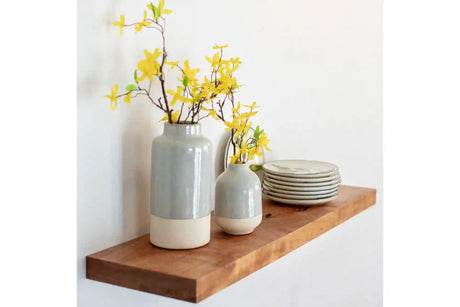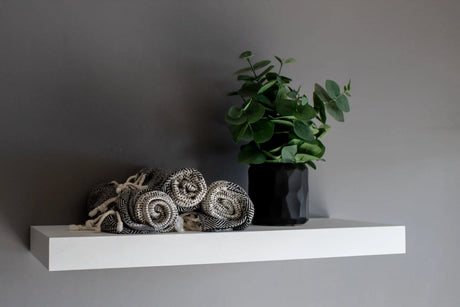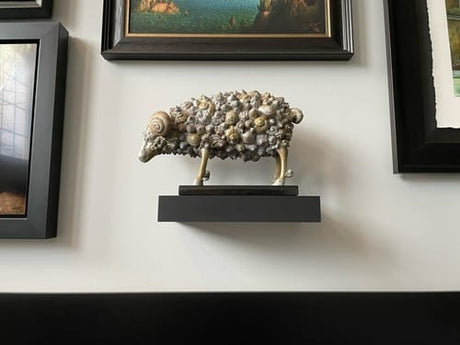

A home bar doesn't need a dedicated room, a granite countertop, or a piece of furniture that looks like it belongs in a hotel lobby. It needs a wall, a few floating shelves for a bar, and enough depth to hold a bottle of bourbon.

That's it. Two or three shelves on the wall behind a small countertop or cart, and suddenly you've got a setup that looks intentional, holds everything you need, and doesn't eat up any floor space. Whether it's a full liquor shelf, a wine display, or a coffee station that moonlights as a cocktail bar on weekends, floating shelves handle all of it.
Behind the Counter: The Classic Bar Shelf Setup
This is the layout that makes people stop and say, "Wait, you built that?" Two or three shelves stacked on the wall behind a bar cart, countertop, or repurposed cabinet. Bottles on the bottom shelf, glasses on the middle, and something decorative on top. It looks like a restaurant back bar, but it's just your dining room wall.
Height: The bottom shelf should sit at least 24" above the counter surface. That gives you room to actually use the counter for mixing without bumping your knuckles on the shelf above. If your bottles are tall (looking at you, Aperol), measure the tallest one and add 2" to 3" of clearance.
Spacing between shelves: 14" to 16" between the bottom and middle shelf if you're storing bottles on the lower one. 10" to 12" between the middle and top shelf if that one holds glasses or shorter items. The taller the items, the more space you need. Don't guess; measure.
Width: Match the width of whatever's below the shelves (cart, counter, cabinet). If the shelves are wider, they look like they belong to a different setup. If they're narrower, the whole thing looks unfinished. 36" to 48" is the most common range I build for bar setups.

The Coffee Bar
The coffee bar is the home bar's daytime counterpart, and it follows the same logic. A section of kitchen counter (or a dedicated cart) with shelves above holding mugs, a grinder, a pour-over stand, and whatever else fuels your morning.
For a coffee station, two shelves are usually enough. Bottom shelf for the mugs you reach for every day, top shelf for the equipment or beans you rotate through. 8" to 10" deep covers most coffee setups since mugs and pour-over gear don't need much depth.
If your coffee bar is an extension of the kitchen, matching the shelf species to your kitchen open shelving ties the rooms together visually. Same wood, same finish, same depth. It reads as one continuous design choice rather than two separate projects.
Depth: Bottles Need Room

This is where bar shelves differ from most other floating shelf setups. A standard liquor bottle is about 3" to 4" in diameter. A wine bottle is closer to 3.5". That means 8" deep shelves technically fit a bottle, but barely, and there's no room behind it for anything else.
I recommend 10" minimum for bar shelves. 12" is better if you want a double row (bottles in back, glasses in front) or if you're storing wider items like decanters and cocktail shakers. A 12" deep shelf loaded with bottles and glassware is carrying real weight, so sturdy floating shelves with proper bracket support are non-negotiable here.
Full breakdown on sizing in my post on choosing the right depth.
Weight: A Full Bar Shelf Gets Heavy Fast
A standard 750ml liquor bottle weighs about 3 lbs. Line up ten of them on a 36" shelf and you're already at 30 lbs before you add glasses, a shaker, or anything else. A fully loaded bar shelf can easily hit 50 to 70 lbs.
Most floating shelves on the market top out at 30 to 50 lbs capacity. That's why you see so many bar setups with shelves that droop after a few months. The brackets aren't rated for the weight, and the shelf material (usually MDF) flexes under sustained load.

Every shelf I build uses the Hovr bracket, which holds 150 lbs per stud. A 36" shelf on two studs gives you 300 lbs of capacity. You could park your entire liquor collection on a single shelf and it wouldn't move. My post on what causes shelves to sag covers the bracket comparison in detail if you want the full picture.
Wood Species: Setting the Mood
The wood you choose sets the tone for the whole bar. This is a spot where the species choice is as much about atmosphere as it is about function.
Walnut is the go-to for home bars. Dark, warm, rich grain. It makes bottles look expensive and glassware look intentional. If you're going for the "speakeasy in my dining room" vibe, walnut is the answer.
White oak works well for lighter, more modern bar setups. Craft cocktail bar energy. The grain is visible but clean, and it pairs well with white tile backsplashes and brass hardware.
Live edge is the wild card. The natural bark edge adds a raw, organic element that contrasts nicely with glass bottles and polished barware. It's not for every space, but when it works, it's the shelf people comment on.
Not sure which direction to go? Samples let you hold the wood against your wall in the actual lighting before you commit.
Add Lighting and the Bar Comes Alive
LED lighting routed into the shelf is probably the single biggest upgrade you can make to a bar setup. A warm-tone LED strip on the underside of each shelf backlights your bottles, makes the labels readable, and turns the whole wall into a feature you'd see in a cocktail bar.
I route the LED channel directly into the wood and drill the cord exit through the back of the shelf. No adhesive strips curling off the bottom, no visible hardware. $50 per shelf. If you're only going to add lighting to one setup in your house, make it the bar.
Solid Hardwood Means You Can Actually Add to It
This is something that doesn't show up in product photos but matters the second you start building out your bar. Because these shelves are 1.8" thick solid hardwood, you can drill into them and mount accessories directly to the underside or face without the material falling apart.
Stemware racks, under-shelf wine glass holders, hooks for bar towels or bottle openers, magnetic knife strips for a coffee station: all of it screws into solid wood and holds. Try that with MDF or particleboard and the material crumbles around the screw hole within a month. Veneer delaminates the moment you put any stress on the surface.
I don't sell the accessories, but I build the shelf that makes them possible. Pick up a stemware rack or a set of under-shelf hooks from wherever you like and mount them yourself. The wood can handle it. That's the difference between a shelf that just sits on your wall and a shelf you can actually build a bar around.
The Dining Room Crossover
If your bar setup is in or adjacent to the dining room, it's worth thinking about both walls together. Dining room floating shelves on the opposite wall holding wine glasses, serving pieces, or candles create a cohesive look when they match the bar shelves in species and depth. Same wood, same finish, different function. The room reads as designed rather than decorated.
Sizing Quick Reference for Bar Shelves
Behind-counter setup: 36" to 48" wide, 10" to 12" deep, 2-3 shelves Coffee station: 24" to 36" wide, 8" to 10" deep, 2 shelves Wine display: 36" wide, 10" deep, 2 shelves (bottles on bottom, glasses on top) Full liquor shelf: 48" to 60" wide, 12" deep (use longer shelves for wider walls)
Every shelf is custom sized to your wall, so you're not stuck rounding up to the nearest standard increment. Measure the space, pick the species, and I'll cut it to fit.
A good home bar isn't about how much money you spend on it. It's about the setup looking like you meant it. A couple of solid hardwood shelves on the wall, the right bottles, and decent lighting. That's all it takes. Browse the bar floating shelves collection to see all the options.