



Dining Room Shelves: From Open Display to Serious Storage, Everything You Need to Know
Where to Put Floating Shelves in a Dining Room
Where to Put Floating Shelves in a Dining Room
Placement in a dining room depends on what you want the shelves to do. Here are the configurations that work best:
Above a buffet or sideboard is the most natural starting point. A shelf or two mounted directly above an existing piece of furniture creates a layered display wall and gives you additional surface area for things that don't fit on the buffet itself. For this setup, keep the bottom shelf 12" to 18" above the furniture piece and run it close to the same width for a cohesive look.
A dedicated display wall opposite or adjacent to the dining table turns an otherwise plain wall into the room's focal point. Two or three shelves at staggered heights hold dishes, glassware, art, plants, and personal objects in a way that reads as intentional rather than cluttered. This is the dining room equivalent of a gallery wall, with more surface area and better display capacity.
Corner floating shelves use the dead space in a dining room corner that typically goes empty. Two shelves butted together at a right angle, pushed tight into the corner using the Hovr bracket's sliding rod, create a display area that works especially well for smaller objects, plants, and decorative pieces. See sizing notes in Section 3 below.
Above a bar cart or wine station is a natural extension of the bar shelf concept into a dining room setting. A shelf or two above the cart holds glassware, bottles, and serving pieces, turning a functional corner into a finished vignette.
For depth and sizing guidance across all these setups, the floating shelf depth guide covers everything in detail.
What to Display on Dining Room Shelves
What to Display on Dining Room Shelves
The dining room is one of the few rooms where purely functional and purely decorative items naturally coexist on the same surface. Here's how to think about what goes on the wall:
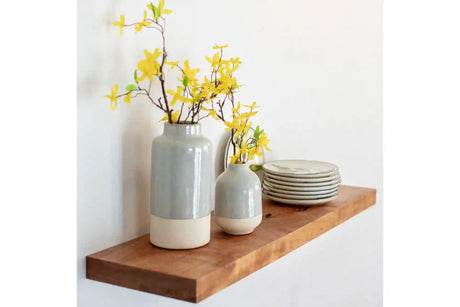
Dishes and serveware displayed on open shelves give a dining room a relaxed, lived-in quality that closed cabinets never achieve. Stack plates, lean platters, or group bowls by color or material. For dishes, 10" to 12" deep gives you enough surface to display without crowding.
Glassware works especially well on a dining room shelf because it catches light and adds visual depth. Wine glasses, vintage tumblers, and everyday glassware all read as display-worthy when arranged intentionally.
Art and framed pieces leaned against the back wall of a shelf rather than hung directly create flexibility and a gallery-like quality. This works particularly well on deeper shelves where frames have surface area to lean on.
Books in a dining room add warmth and personality that purely decorative objects sometimes lack. Cookbooks are an especially natural fit: both functional and visually interesting, they signal something about how the room gets used.
Plants bring life to a dining room display in a way nothing else does. A single trailing plant on an upper shelf or a small potted herb on a lower one adds organic texture that balances harder objects like dishes and glassware.
For more on styling approaches that work across room types, the How to Style Floating Shelves in Your Living Room post covers principles that apply directly to dining rooms.
What Size Dining Room Shelf Do I Need?
What Size Dining Room Shelf Do I Need?
Every shelf is made to order between 12" and 72" long and 6" to 12" deep. Here's how to think about sizing for a dining room specifically:
8" deep works well for a lighter display: framed art, small plants, candles, and decorative objects. It keeps the profile slim and suits a dining room where you want the wall to feel light rather than heavy.
10" deep is the sweet spot for most dining room applications. It handles dishes, books, glassware, and mixed displays comfortably. This is what I'd suggest for most setups, especially if you're unsure.
12" deep makes sense if you're using shelves for active storage: serving platters, stacked dishes, or anything with real weight and footprint. At this depth, the Hovr bracket at 150 pounds per stud is doing serious work, which is exactly what it's built for.
For length, match the shelf to the wall or furniture piece it's sitting above. A shelf that runs close to the full width of a buffet or sideboard looks intentional; one that's clearly too short for the wall reads as afterthought. Order the closest standard size and put your exact dimensions in the order notes on the cart page. Need something custom? Reach out directly.
Which Wood Species Works Best in a Dining Room?
Which Wood Species Works Best in a Dining Room?
The dining room is one of the more style-forward rooms in the house, which means wood selection matters more here than in a utility space. Here's how each species reads:
Walnut brings richness and depth that suits a dining room that leans warm and traditional. The dark grain against lighter walls creates contrast that makes a display wall feel genuinely designed. It pairs naturally with linen textiles, warm neutrals, and the organic quality of ceramics and wooden serving pieces.
White oak is the most versatile choice. Its warm, neutral grain works with almost any dining room color palette and doesn't compete with what's on the shelf. It's especially strong in modern farmhouse, transitional, and Scandinavian-inspired spaces. Browse all sizes in the white oak floating shelves collection.
Cherry brings warmth that deepens over time. For a dining room meant to feel established and layered, cherry develops a richness that suits the space in a way lighter woods can't match.
Maple keeps things clean and light. It suits a bright dining room with a modern or minimal aesthetic where the goal is freshness rather than warmth.
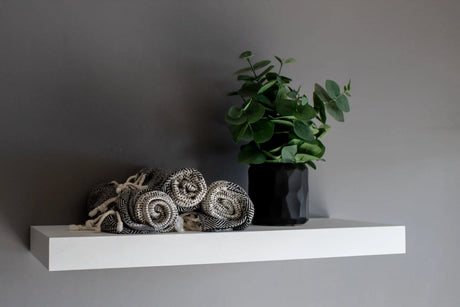
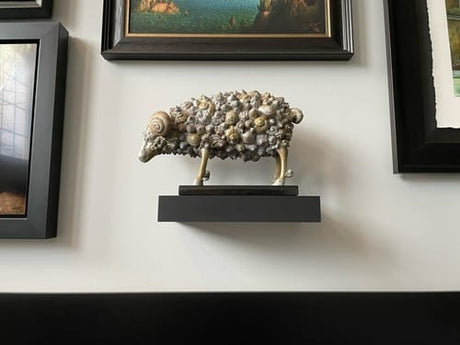
Painted white works well when the shelves are meant to recede and let the display do the visual work. Painted black creates a bold graphic contrast, especially effective against light walls in a more modern dining room.
Not sure which direction fits your space? Order samples and see them in your actual room before committing.
Open Shelving in the Dining Room vs. Closed Storage
Open Shelving in the Dining Room vs. Closed Storage
Open shelving in a dining room is a deliberate choice, and it's worth understanding what you're trading when you choose it over closed cabinets or a hutch.
What open shelves do better: They make a room feel larger and more relaxed. Everything is visible and accessible. The display becomes part of the room's design rather than hidden behind doors. For people who entertain regularly and want their best pieces on show, open shelving is the natural choice.
What closed storage does better: It conceals the things you don't want visible. If your everyday dishes are mismatched or your serveware is purely functional, closed doors keep the room looking cleaner with less effort.
The middle path: open shelves for the things you want displayed, closed storage below or elsewhere for the things you don't. A shelf or two on the wall for your best pieces, and a sideboard with doors for everything else. That combination gives you the warmth and personality of open display without requiring everything in the room to earn its place on the wall.
A coffee station in the dining room doubles as a serving area. Here's how to set one up.
For more on the honest trade-offs of open shelving, read what are the disadvantages of floating shelves.

The Room Where Everything Matters. The Hardware Should Too.
Shelf Expression is proud to partner with Hovr Brackets. This system delivers 13x the strength of standard floating shelf hardware, so your dining room shelves hold dishes, glassware, and everything else you put on display without flex, forward lean, or loosening over time. At 150 pounds per stud, these shelves handle a fully loaded display and keep it level for years.

Cheap Shelves Sag. Yours Won't.
The standard two-prong rod bracket that ships with most floating shelves tops out around 50 pounds per stud. For a dining room shelf holding dishes, serving pieces, and glassware, that's a load worth thinking about.
The Hovr Bracket screws together into a single interlocking unit at 150 pounds per stud. Solid hardwood, concealed hardware, lifetime guarantee. The shelf you install for your dining room stays exactly where you put it, no matter what goes on it.
Experience The Essence of Handmade
Imagine home decor that’s handmade—crafted for you.
Imagine the quality of custom shelves created just for you. No assembly lines, no particle board, no wordless directions. No outsourced customer service. Just clear communication between you and the craftsman.
Experience Shelf Expression and Display Your Joy.