



Everything to know about living room floating shelves
Where to Place Floating Shelves in the Living Room
Where to Place Floating Shelves in the Living Room
The most common living room shelf setups I build for:
Above the sofa. This is the most popular placement. A single long shelf (48" to 58") or a pair of stacked shelves centered above the couch creates an anchor for the wall without competing with the furniture. I recommend keeping the bottom shelf 18" to 24" above the top of the sofa backrest so nothing gets bumped when you lean back. Depth of 8" to 10" works best here since you want display items, not deep storage, in this spot.
Around the TV. Floating shelves flanking a mounted TV replace bulky entertainment centers while giving you space for speakers, streaming boxes, controllers, and decor. Stagger the shelves at different heights on either side for a less rigid look, or line them up symmetrically for a cleaner feel. For heavier equipment like soundbars or game consoles, 10" to 12" deep at 150 pounds per stud handles the weight easily.
Flanking a fireplace. Shelves on either side of a fireplace mantel create balance and fill wall space that often goes unused. This is a great spot for stacked books, candles, and family photos. If you're also looking for a mantel, I build those in walnut and white oak.
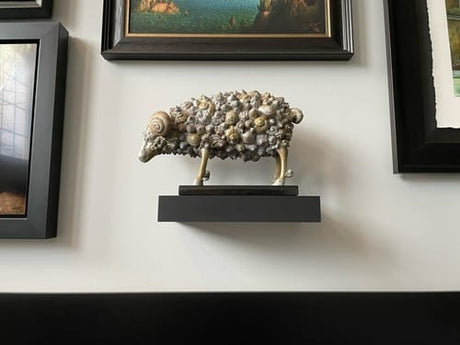
Gallery wall alternative. Instead of hanging 15 individual frames (and putting 30 holes in the wall), run two or three floating shelves and lean framed photos and prints against the wall on each one. This lets you swap out art and rearrange without re-drilling. A picture ledge setup works best at 8" deep.
Filling an awkward wall. That narrow space between a doorway and a corner, or the empty wall at the end of a hallway leading to the living room. A shorter shelf (24" to 36") turns dead space into a display area without overwhelming it.
For more placement ideas, check out designing a perfect space with floating shelves.
What Depth Works Best for Living Room Shelves?
What Depth Works Best for Living Room Shelves?
For most living room setups, 8" to 10" is the range you want. Here's how I think about it:
8" deep is ideal for display-focused shelves: framed photos, small plants, candles, and decorative objects. It keeps a low profile on the wall and works well above sofas where you don't want the shelf projecting too far into the room.
10" deep is the versatile choice. It handles books, larger frames, vases, and small electronics. If you're using shelves as a TV entertainment setup or a bookshelf replacement, 10" gives you enough surface area without looking bulky. I cover this in more detail in the floating shelf depth guide.
12" deep is for heavy-duty use: large art books, vinyl record players, speakers, or anything substantial. At this depth, the Hovr bracket's 150 lb per stud capacity matters because you're likely loading the shelf with real weight.
Which Wood Species Fits Your Living Room?
Which Wood Species Fits Your Living Room?
The right wood depends on what else is in the room. Here's how each species reads in a living room setting:
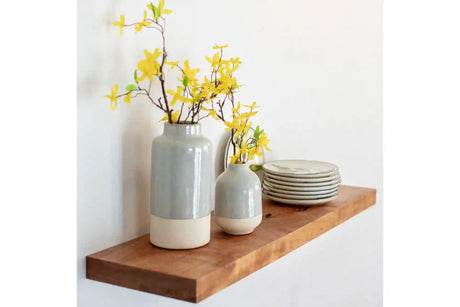
White oak is the most versatile option. Its warm, neutral grain works with white walls, stone fireplaces, light floors, and most color palettes. It's the wood that blends without being boring.
Walnut makes a statement. The dark, rich grain creates contrast against lighter walls and draws the eye. If you want the shelves to be a focal point, walnut does that better than any other species.
Maple is light, clean, and subtle. In modern or Scandinavian-inspired living rooms, maple's pale tone and minimal grain keep things feeling open and uncluttered.
Cherry adds warmth that deepens over time. It starts as a soft pinkish-brown and matures into a richer reddish tone over months and years. It works well in traditional and transitional living rooms.
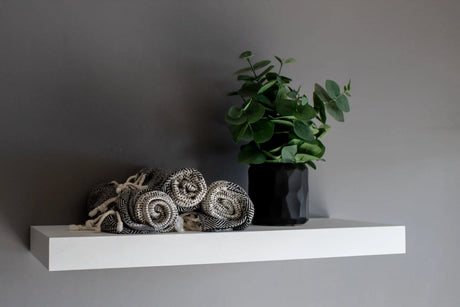
Painted white or painted black shelves disappear into matching walls or create crisp contrast. Painted shelves work especially well when you want the items on the shelf to be the star, not the wood itself.
Live edge walnut brings a natural, organic character that stands out in both modern and rustic living rooms. The raw edge adds visual texture that no straight-cut shelf can match.
Floating Shelves as an Entertainment Center Alternative
Floating Shelves as an Entertainment Center Alternative
Traditional entertainment centers are bulky, expensive, and hard to move. Floating shelves replace them at a fraction of the cost while opening up floor space and giving you a cleaner, more modern look.
A typical setup: mount the TV on the wall, then install two or three floating shelves below it for streaming devices, game consoles, a soundbar, and decor. Add a shelf or two on either side for speakers, books, or plants. The entire setup mounts to the wall, which means nothing on the floor, easier cleaning, and a room that feels bigger.
At 150 pounds per stud, the Hovr bracket handles everything you'd put on an entertainment shelf. I've had customers load shelves with turntables, full speaker systems, and stacks of vinyl records without any concern. Read more about floating TV shelves for entertainment centers.
Floating Shelf Decorating Ideas for the Living Room
Floating Shelf Decorating Ideas for the Living Room
Styling living room shelves is where most people overthink it. A few simple principles:
Mix heights. Alternate taller items (vases, framed art) with shorter ones (candles, small plants). This creates rhythm across the shelf without looking cluttered.
Group in odd numbers. Three items grouped together reads better visually than two or four. A small plant, a framed photo, and a candle is a classic trio.
Leave breathing room. Don't fill every inch of shelf surface. Empty space between groups of items makes the display look intentional rather than crammed.
Layer frames. Lean larger frames behind smaller ones for depth. This works especially well on deeper shelves (10"+) where you have front-to-back space to play with.
Rotate seasonally. Swap out a few items each season to keep the shelves feeling fresh. Fall candles and dried flowers in autumn, greenery and lighter colors in spring. The shelves stay the same; the styling evolves.
Custom Sizing for Your Living Room
Custom Sizing for Your Living Room
Every living room wall is different. I make every shelf to order between 12" and 72" long and 6" to 12" deep. For walls that need something longer, reach out directly and I'll see what I can do.
Order the closest size on the product page and add your exact dimensions in the order notes on the cart page. Custom sizing is part of the process, not an upcharge.
LED routing is also available at $50/shelf for under-shelf ambient lighting. It works especially well for living room shelves above a TV or behind a sofa. Mention it in your order notes or email me after placing your order.
For placement ideas, styling tips, and species recommendations, read our living room shelf styling guide.

Why These Living Room Floating Shelves Won't Sag.
Shelf Expression is proud to partner with Hovr Brackets. This system gives you 13x the strength, which provides no sag or slanting over time. It allows for secure floating shelves that can hold 150 pounds for each stud they're installed on. Perfect for holding books, art, speakers, and everything else you want on display in your living room.

Why Use Outdated Hardware For Your Living Room Floating Shelves?
The current standard for floating shelves and other floating solutions is designed with a 2-prong system. This design causes major weaknesses within the floating solution. The average load capacity is 50 pounds per stud.
The Hovr Bracket System uses a male and female bracket that interlock and screw together to form unparalleled strength. Thanks to the Hovr Bracket, our living room floating shelves hold 150 pounds per stud!
Experience The Essence of Handmade
Imagine home decor that’s handmade—crafted for your living room
Imagine the quality of custom living room floating shelves created just for you. No assembly lines, no particle board, no wordless directions. No outsourced customer service. Just clear communication between you and the craftsman.
Experience Shelf Expression and Display Your Joy.