



Wood, Grain, Character: Everything Worth Knowing Before You Order
What Makes a Floating Shelf Actually Rustic
What Makes a Floating Shelf Actually Rustic
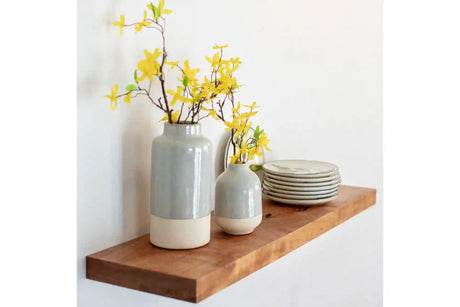
The word gets applied to a lot of shelves that don't earn it. A shelf printed with a wood-grain pattern isn't rustic. A hollow MDF box with a walnut-colored finish isn't rustic. Rustic means the material has the actual properties of real wood: grain that varies from board to board, natural figure, color that deepens with age and light exposure, edges that show what the wood actually is.
Every shelf I build starts as a real hardwood board, milled to your dimensions. The grain you see on the face is the grain that runs through the full thickness of the shelf. The edges show the same wood. There's nothing underneath a veneer because there's no veneer. That's what makes a shelf look genuinely rustic rather than rustic-adjacent.
The species choice determines how much natural character the result carries. A live edge walnut shelf with the natural bark contour intact is unmistakably rustic. A maple shelf with a pale, tight grain reads more modern. Most of the species in between, walnut, white oak, cherry, can lean in either direction depending on the room and the finish.
Which Wood Species for Rustic Floating Shelves
Which Wood Species for Rustic Floating Shelves
Live edge walnut is the most organic option in the lineup. The natural contour of the walnut slab runs along the front edge, giving each piece a profile that no two shelves share. The dark chocolate tones, natural figuring in the grain, and irregular live edge create exactly the kind of raw, natural character that rustic style is built around. Browse live edge floating shelves.
Walnut without the live edge still brings serious character through its dark grain and natural warmth. The rich brown tones work with exposed brick, stone, wood beams, and the warm neutrals that define rustic interiors. As the wood ages it deepens slightly, which suits a space meant to feel established rather than newly designed. Browse walnut floating shelves.
White oak reads as rustic in farmhouse, transitional, and modern farmhouse spaces where the aesthetic is warmer and more natural than strictly contemporary. The ray fleck patterning adds grain interest that suits the style, and it stains exceptionally well in warm brown tones if you want a darker, more weathered look. Browse white oak floating shelves.
Cherry brings natural character through time rather than immediately. It starts as a soft pinkish-brown and deepens into a rich amber patina over years of light exposure, a process that suits this aesthetic perfectly. A cherry shelf installed today looks noticeably different and richer five years from now. Browse cherry floating shelves.
Maple is the lightest species in the lineup and sits at the more neutral end of the spectrum. In a bright farmhouse kitchen or a whitewashed space, maple's pale tone reads as natural and warm without the heaviness of darker species. Browse maple floating shelves.
Not sure which species fits your space? Order samples and see the grain in your actual room.
Solid New Hardwood vs. Reclaimed and Barn Wood
Solid New Hardwood vs. Reclaimed and Barn Wood
This comparison comes up often enough to address directly. Reclaimed wood, barn wood, and distressed shelves have real appeal, but they come with tradeoffs worth understanding before you commit.
Reclaimed and barn wood shelves carry genuine history in the material, which is part of what makes them appealing. The trade-off is structural inconsistency. Reclaimed wood can have voids, nail holes, soft spots from old fasteners, and moisture damage that affects how well it holds a bracket and how it performs under load over time. The aged surface is the feature, but it can also be a liability on a shelf that needs to support real weight.
Solid new hardwood starts with a structurally sound board, milled flat and dried to consistent moisture content. It doesn't carry the history of reclaimed wood, but it carries the natural character of the species: grain figure, color variation, the occasional knot or mineral streak that comes from the tree rather than from a warehouse floor. On a walnut or live edge shelf, that character is substantial.
The honest comparison: if you want provenance and aged patina, reclaimed wood has it. If you want rustic character with reliable structural performance and 300 lb weight capacity, solid hardwood is the stronger choice. These shelves are not trying to look old. They're built from real wood that looks exactly like what it is.
In the Kitchen
In the Kitchen
The kitchen is where natural wood floating shelves make the most visual impact, especially when replacing or complementing white or painted cabinetry. The contrast between natural hardwood and painted surfaces is a defining element of farmhouse and rustic kitchen design.
Open shelving above the counter in solid walnut or white oak replaces upper cabinets with something that feels warmer, more personal, and more interesting. A full run holding dishes, glassware, and everyday objects turns the wall above the counter into the room's most compelling feature. Browse kitchen floating shelves.
Corner configurations work especially well where dead corner wall space is common. Two shelves butted together in an L formation around a corner sink or counter section creates a continuous run that makes the most of every inch of wall. Browse corner floating shelves.
Depth recommendations for kitchen shelves: 10" for most kitchen applications, 12" for deeper plates and larger items. The floating shelf depth guide covers kitchen sizing in detail.
Where These Shelves Work Best Beyond the Kitchen
Where These Shelves Work Best Beyond the Kitchen
Living room arrangements with natural wood shelves above a fireplace, flanking a TV, or running across a feature wall create the kind of organic warmth that defines a room meant to feel lived-in. A single long walnut shelf above a sofa, or a staggered pair of live edge shelves at different heights, anchors the wall with natural material. Browse living room floating shelves.
Dining room walls with rustic shelves holding ceramics, glassware, and personal objects create a warm, relaxed quality that formal furniture can't achieve. Browse dining room floating shelves.
Bedroom natural wood shelves above a bed or replacing nightstands add natural warmth to a room without the visual weight of dark furniture. Walnut or cherry in a bedroom with warm textiles and natural materials creates the kind of layered, settled quality that rustic style is after. Browse bedroom floating shelves.
Bar setups with dark walnut shelves holding bottles and glassware create a rich, warm bar aesthetic that suits farmhouse and organic entertaining spaces. Browse bar floating shelves.
Sizing Wood Floating Shelves
Sizing Wood Floating Shelves
Every shelf is made to your exact dimensions within the 6" to 12" depth and 12" to 72" length range. In rustic and farmhouse spaces, longer shelves tend to read as more intentional: a 60" or 72" walnut shelf spanning most of a wall has more presence than a shorter piece. For longer shelves with the grain running the full span, browse long floating shelves.
Depth in rustic applications often leans toward the more substantial end. A 10" or 12" deep walnut shelf has visual weight that suits the aesthetic, while a 6" shelf reads as more minimal and contemporary. Match the depth to what the shelf is doing: deeper for kitchen storage and books, shallower for purely decorative display.
For custom dimensions outside the standard range, reach out directly before ordering and I'll confirm what's achievable.
Three Ways Wood Shows Up
-
![Live edge walnut floating shelf]()
The Organic Edge: Live Edge Walnut
A live edge walnut shelf styled with trailing plants, framed botanical art, books, and a woven basket. The natural contour of the slab runs the full length of the front edge, making every shelf genuinely unique. No two live edge shelves look the same because no two walnut slabs do. This is what the word means when the material earns it.
-
![]()
The Warm Bar: Walnut With Grain and Character
A finished edge walnut shelf above a bar setup holding whiskey bottles, glassware, and books. The dark chocolate grain against the lighter wall creates the kind of richness that makes a bar feel intentional rather than assembled. Solid black walnut aged well before it was milled and it will age well on your wall.
-
![]()
Unexpected Application: Whatever the Space Requires
Five white oak shelves stacked floor to ceiling in a bright kitchen with white cabinets and brass fixtures. The warm, natural grain of white oak is what makes this work: present enough to add character, neutral enough to let the room breathe. Open shelving in solid hardwood turns a functional kitchen wall into the room's best feature.


Real Wood Looks Like Real Wood. That's the Point.
Most shelves marketed as rustic floating shelves are printed grain patterns on MDF or veneer over hollow core construction. The grain never changes because it's a photograph. The edges show what's underneath because veneers peel. These shelves are solid hardwood all the way through: the grain you see on the face runs to the back edge, and the sides show the same wood. Cut it anywhere and it's the same material. That's what real wood looks like, and it's the only reason a shelf can be called genuinely rustic. Learn more about the wood we use.

300 lbs. No Sag. No Apologies.
A shelf that sags under a row of books or a set of cast iron in the first year isn't lasting, and lasting is what rustic style is built on. Every shelf I build uses the Hovr Bracket System at 300 lbs capacity, solid hardwood construction, and a lifetime guarantee against warping and cracking. It holds what you put on it and stays exactly where you installed it. That's not an aesthetic choice. It's just how it's built.
Experience The Essence of Handmade
Imagine home decor that’s handmade—
Imagine the quality of custom floating shelves created just for you. No assembly lines, no particle board, no wordless directions. No outsourced customer service. Just clear communication between you and the craftsman.
Experience Shelf Expression and Display Your Joy.