
After building over 5,000 custom floating shelves over the years, I can tell you this is where most people overthink things. The truth is, 90% of the time it comes down to how you plan to use the shelf and what room it's going in.
There's no universal answer, but there is a framework that works every time. Start with the use case, factor in the room, and the right depth falls into place. This guide covers all of it.
The Three Depths and When to Use Each
Here's how I usually guide customers:
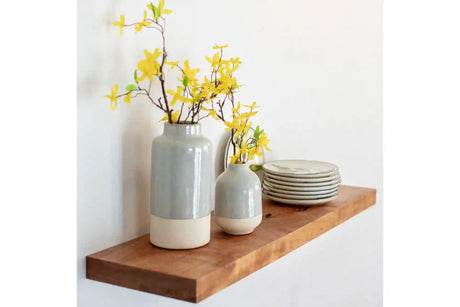
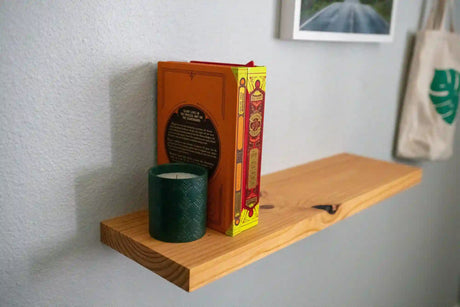
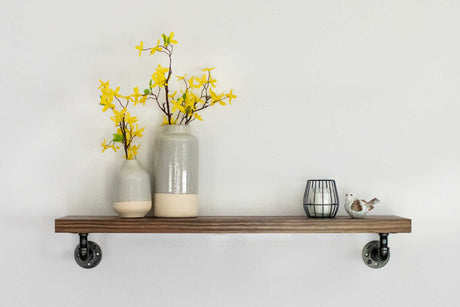
8" deep shelves These are great for lighter, decorative use. Think picture frames, small plants, candles, that kind of thing. They look clean and minimal, but they're not very practical if you're trying to actually store anything substantial.
8" is also the most popular depth for bathroom floating shelves, where space is usually tight and the shelves need to stay close to the wall.
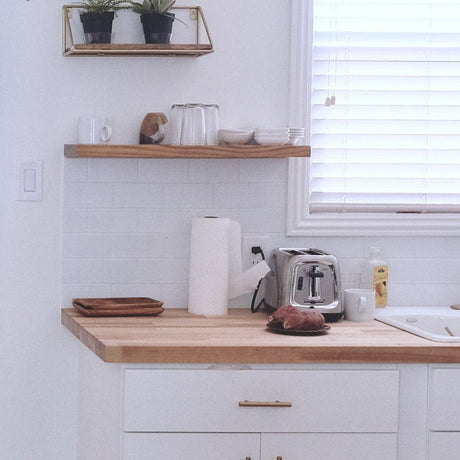
10" deep shelves This is the sweet spot. If someone isn't sure what to choose, this is almost always what I recommend. It gives you enough depth for most everyday items without sticking too far out into the room. Works really well for kitchen floating shelves, living room floating shelves, and bar floating shelves.
White oak is the most requested species for these setups. Browse the white oak floating shelves collection to see all available sizes.
12" deep shelves If you're planning to store dishes, bowls, or anything heavier, this is the move. You'll appreciate the extra depth pretty quickly. Just keep in mind, the deeper you go, the more important proper bracket support and stud placement become.
If you're on the fence, I usually tell people to lean toward 10" or 12" depending on whether it's more for looks or actual use. It's a lot easier to wish you had a little more depth than it is to deal with a shelf that feels too bulky.

Depth by Room: What I See Working
Every room has its own logic when it comes to shelf depth. Here's what I recommend based on what I've built for customers over the years.
Kitchen: 10" or 12". If you're doing kitchen open shelving and replacing upper cabinets, go 12". If the shelves are decorative or holding spices and mugs, 10" works fine. This is the split I see most often.
Bathroom: 8". Space is usually tight, especially above a toilet, and you're not storing anything deep. Towels, candles, a plant. 8" sits close to the wall and stays out of the way.

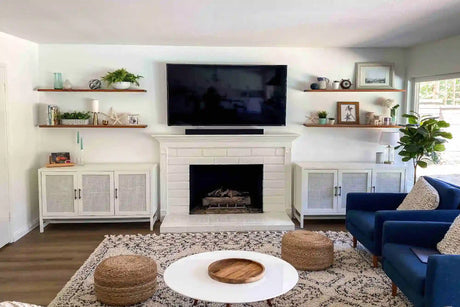
Living room: 10" covers most setups. Deep enough for books, frames, and vases without looking like a countertop sticking out of the wall. If you're going above a couch, 8" can work too since those are usually more decorative.
Bedroom: 8" or 10". Nightstand replacements work great at 10" (phone, lamp, book, alarm clock). Shelves above the bed or in a closet are usually better at 8" to keep the profile slim.
Office: 10" or 12". If you're replacing a desk hutch and need room for monitors, books, and supplies, go 12". For display shelves in a home office, 10" is plenty.
Nursery: 8". Picture books, stuffed animals, small decor. Shallow shelves keep everything within reach for you and out of reach for the kid (depending on mounting height). Nursery floating shelves at 8" are the most common request I get for these rooms.
Entryway: 8" or 10". Keys, wallet, sunglasses, a small plant. You want something functional without eating into the hallway. Entryway floating shelves at 8" keep things tight to the wall.
Laundry room: 10" or 12". Detergent bottles, folded towels, baskets. These shelves actually need to hold stuff, so don't go too shallow. I'd lean 12" if you have the wall space. Laundry room shelving at this depth handles everything you'd want up and off the floor.
Dining room: 10". Wine glasses, serving pieces, small plants. 10" gives you enough room to display without making the wall feel heavy. Dining room floating shelves at this depth look balanced in most spaces.
Bar: 10" or 12". Bottles need depth. A standard liquor bottle is about 3" to 4" in diameter, but you want room behind it for glasses or mixers. 12" gives you a double row if you want it. I build a lot of floating shelves for bars and 10" is the minimum I'd recommend.
Why Depth Affects Weight Capacity
This is something most people don't think about until it's too late. A deeper shelf holds more stuff, which means more weight. At 12" deep and fully loaded with dishes or books, you're pushing real weight onto the brackets.
Every shelf I build uses the Hovr bracket system, which handles up to 150 lbs per stud at 8" depth. That's a real number, not a marketing number. But even with that capacity, deeper shelves need proper stud placement. If you're going 12" deep and planning to load it up, read the full breakdown in my weight capacity guide before you order.
For shelves that need to carry serious weight, like heavy duty floating shelves in kitchens and laundry rooms or floating bookshelves loaded with hardcovers, I always recommend hitting at least two studs. Three if you can.

Depth and Length Go Together
A 36" long shelf at 8" deep looks proportional. That same shelf at 12" deep starts to look stubby. If you're going deep, go long. And if you're going long (48" to 72"), you probably want at least 10" of depth so the shelf doesn't look like a plank.
I covered this in detail in the length guide, but the short version: depth and length should feel balanced. A 60" x 8" shelf looks like a ledge. A 24" x 12" shelf looks like a cutting board. Match them.
Custom Sizing: You're Not Stuck With Standard Depths
I build every shelf to order, so you're not locked into 8", 10", or 12". Need 9"? 11"? Something at 6" for a tight hallway? That's fine. Custom floating shelves range from 6" to 12" deep and 12" to 72" long, and I cut to your exact specs.
If you're fitting shelves into a corner, between cabinets, or into an awkward nook, measure front and back (nothing is perfectly square) and order 1/8" shorter than the span. That leaves a 1/16" gap on each side for a clean fit.
Quick Reference: Depth by Use
6" to 8": Decorative items, picture frames, candles, small plants, bathroom accessories, nursery books
8" to 10": Coffee mugs, spice jars, small books, everyday kitchen items, entryway essentials, bedroom shelves as nightstand replacements
10" to 12": Dinner plates, cookbooks, liquor bottles, office shelves for monitors and supplies, laundry room storage
12": Large dinnerware, pots and pans, heavy book collections, anything where you need the shelf to actually work for a living
Not Sure? Order a Sample
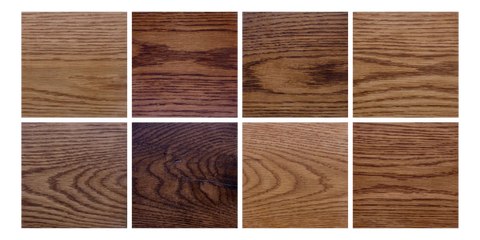
If you're torn between two depths, order a sample and hold it up against your wall. It sounds simple, but seeing the depth in your actual space is worth more than any guide (including this one). I offer samples in every wood species: walnut, white oak, maple, cherry, live edge walnut, painted white, and painted black.
Still not sure what depth works for your setup? Reach out and I'll help you figure it out. I do this every day.