
The bedroom is the one room in the house where every surface pulls double duty. Your nightstand is a charging station. Your dresser is a catch-all. And that chair in the corner? That's a clothes rack now, and we both know it.
Bedroom floating shelves solve most of these problems without adding furniture. They get stuff off the floor, clear the surfaces, and make the room feel bigger in the process. And because they mount to the wall instead of sitting on the floor, you keep that open, uncluttered look that makes a bedroom actually feel like a place you want to sleep.
Here's how I'd use them, broken down by placement.
Above the Bed
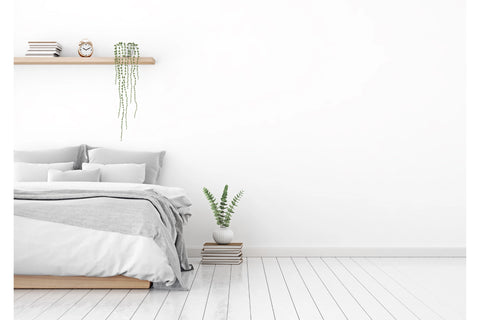
This is the most popular placement I see, and it makes sense. The wall above your headboard is prime real estate that usually goes completely unused. A single shelf or a stacked pair turns it into display space for frames, plants, candles, or whatever makes the room feel like yours.
Sizing: 36" to 48" wide works for most beds. A queen is 60" wide, so a shelf in that range sits comfortably inside the headboard width without looking too tight or overhanging the edges. Depth should be 8" to keep the profile slim. You don't want anything heavy or deep directly above where you sleep.
Height: Mount the bottom shelf at least 8" to 10" above the top of your headboard. High enough that you don't bump it sitting up in bed, low enough that it still feels connected to the bed visually. If you're stacking two shelves, space them 10" to 12" apart. My post Stop Eyeballing It covers shelf spacing math in detail.
What to put on them: Keep it light, both visually and literally. Framed photos, a small trailing plant, a candle, a couple of books standing upright. This isn't a storage shelf. It's a design element. Resist the urge to load it up.
Nightstand Replacement
This is the one that surprises people. A single floating shelf at nightstand height (about 24" to 26" from the floor, or level with the top of your mattress) holds everything a traditional nightstand does, without the bulk.

Phone, lamp, book, glass of water. That's the nightstand checklist, and a 24" x 10" shelf handles all of it. You get the same function with about 80% less visual weight in the room, and you can actually vacuum under the bed without moving furniture.
For bedrooms where space is tight (apartments, guest rooms, kids' rooms), this is one of the best moves you can make. One shelf on each side of the bed, same height, same length, and the room instantly feels twice as open.
In the Closet
Closets are where floating shelves quietly become the most useful thing in the room. Folded sweaters, shoes, bags, hats, extra linens: all the stuff that either ends up on the floor or crammed into a dresser drawer.
I build a lot of closet shelves at 10" to 12" deep and 24" to 36" wide. The depth matters here because you're actually storing things, not displaying them. A stack of folded jeans is about 9" deep, so 10" gives you a clean fit with a little room to spare.
If your closet has an awkward corner layout, measure front and back (nothing is perfectly square) and order 1/8" shorter than the span. That leaves a 1/16" gap on each side for a clean fit.
Reading Nook / Bookshelf Wall
If you're a reader, a wall of floating wall bookshelves in the bedroom is better than any bookcase. No floor footprint, no back panel collecting dust, and you can see every spine at a glance.

Go 10" to 11" deep for books (most hardcovers are about 9" tall when lying flat, and you want a little overhang in the front so they're easy to grab). Stack three to five shelves on a single wall with 10" to 12" of vertical spacing between them. That's enough for a serious collection without turning the bedroom into a library.
These shelves will carry real weight once they're loaded. A 36" shelf full of hardcovers can hit 60 to 80 lbs easily. That's where the Hovr bracket system earns its keep: 150 lbs per stud, no sag, no drama. More on that in the weight capacity post if you want the full breakdown.
Desk Shelf / Workspace
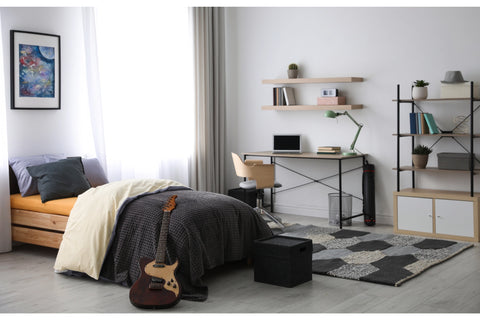
A floating shelf at desk height (28" to 30" from the floor) with a second shelf 14" to 16" above it creates a minimal workspace without an actual desk. Laptop on the lower shelf, books and supplies on the upper one. It's not going to replace a full home office, but for a bedroom that needs to double as a work-from-home spot, it works better than you'd expect.
TV Wall
A wall-mounted TV with a single shelf underneath replaces the bedroom TV stand entirely. 8" to 10" deep, slightly wider than the TV, mounted a few inches below the screen. Streaming box, remote, done. The rest of the wall stays clean.
The bedroom version is simpler than the living room version. One shelf, maybe two. Keep it minimal. The bedroom isn't the place for a five-shelf entertainment center.
Which Wood Species Works Best in a Bedroom?
Bedrooms tend to be calmer, quieter rooms, so the wood choice matters more here than in a kitchen or bar where there's a lot of visual noise competing for attention.
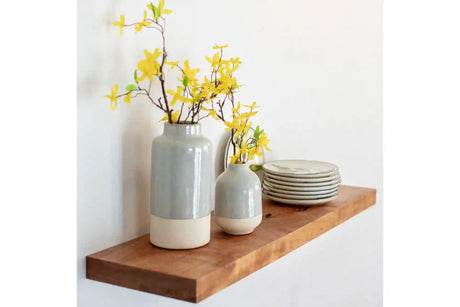
Walnut shelves are the most popular species I build for bedrooms. The dark, warm grain reads sophisticated without being heavy. It pairs well with white bedding, light walls, and neutral furniture.
White oak shelves work well in lighter, more modern bedrooms. The grain is subtle, the tone is warm without being yellow, and it blends into most color schemes without standing out too much.
Maple shelves are the lightest species I offer. Clean, pale, minimal. Great for Scandinavian-style bedrooms or nurseries where you want the wood to almost disappear into the wall.
For nursery wall shelves specifically, I also offer custom paint matching (Benjamin Moore, Sherwin-Williams, or hex codes). If the nursery has a specific color scheme, the shelves can match it exactly.
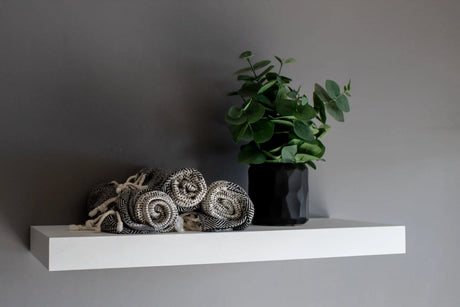
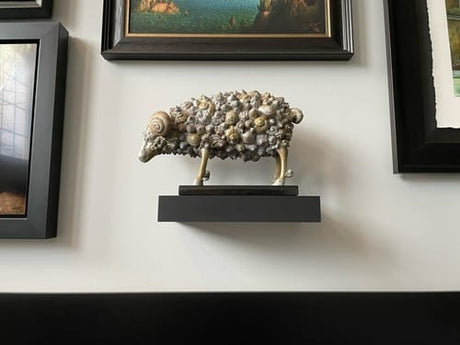
Painted white, painted black, and live edge walnut are also available if you want the shelves to blend into the wall, contrast with it, or add a raw organic element. Not sure which species fits your space? Samples let you see the grain and color in person before committing.
Sizing and Depth Quick Reference for Bedrooms
Above bed: 36" to 48" wide, 8" deep Nightstand replacement: 20" to 24" wide, 10" deep Closet shelves: 24" to 36" wide, 10" to 12" deep Bookshelves: 36" to 48" wide, 10" to 11" deep Desk shelf: 36" to 48" wide, 12" deep TV shelf: match TV width, 8" to 10" deep
Every shelf I build is built to your exact dimensions, so you're not stuck with standard sizes. Measure the wall, pick the species, and I'll cut it to fit. If you're not sure what depth to go with, choosing the right shelf depth covers that in detail.
Add Lighting and the Whole Mood Changes
This is the bedroom's secret weapon. An LED channel routed into the shelf gives you soft accent lighting that works as a reading light, a night light, or just ambiance. It's especially effective on shelves above the bed or flanking a TV, where the glow washes down the wall without being harsh.
I route the channel directly into the wood (no adhesive strips, no visible hardware) and drill a hole through the back of the shelf for the cord. Clean install, permanent result. $50 per shelf.
If you're ready to start planning, browse the bedroom floating shelves collection or get in touch if you have questions about sizing, species, or installation. I do this every day.