

I get asked all the time why so many people are pulling out upper cabinets and replacing them with kitchen floating shelves. And honestly, once you hear the reasons, the better question is why everyone hasn't done it yet.
I've built hundreds of kitchen shelf setups at this point. Here are the 12 reasons my customers keep giving me for making the switch.
1. You Can Actually See What You Own
Upper cabinets are where Tupperware lids and expired spices go to die. You shove things in, close the door, and forget they exist until you find them three years later during a move.

Open shelving puts everything in plain sight. Plates, bowls, mugs, spices, oils. You know exactly what you have, where it is, and when you're running low. Less food waste, less duplicate buying, less time digging through dark cabinets with a flashlight.
2. The Kitchen Feels Twice as Big
This is the one that surprises people the most. Removing upper cabinets and replacing them with open shelves makes the whole room feel taller and more open. Cabinets create a visual ceiling line about 18" below the actual ceiling. Shelves don't. The wall opens up, the sightline extends, and a galley kitchen that felt cramped suddenly feels like it can breathe.
This matters even more in smaller kitchens where every inch of visual space counts. Pairing open shelving with good natural light amplifies the effect. Quality door solutions in LA and similar window upgrades that let more light into the kitchen work hand in hand with floating shelves to make a compact space feel open and airy.

3. Everything Is Within Reach
No more standing on your toes reaching into the back of an upper cabinet. No more pulling out six things to get to the one thing behind them. Floating shelves put your most-used items at eye level or just above, right where you can grab them without thinking.
This is especially useful for guests. When someone's in your kitchen for the first time, they can see where the glasses are, where the mugs are, where the plates are. No rummaging, no awkward "where do you keep the..." conversations.
4. You Don't Have to Go All In
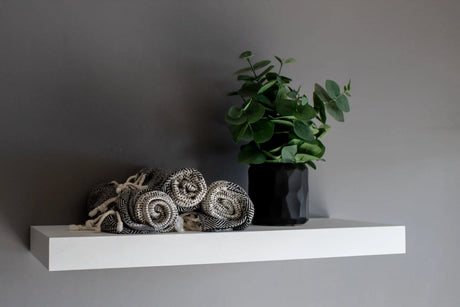
This isn't an all-or-nothing decision. You don't have to rip out every cabinet to get the benefits. The most popular setup I build for kitchens is a mix: cabinets below the counter for pots, pans, and the stuff you want hidden, and floating shelves above the counter for the things you want on display.
Two or three shelves on a single wall, flanking a window or above a countertop, completely changes the feel of the kitchen without a full renovation. It's a weekend project, not a remodel.

5. Seasonal Styling Becomes Easy
Swap out the lemonade pitcher and tall glasses for earth-toned mugs and a kettle, and the kitchen shifts from summer to fall without touching the walls. The shelf stays the same. The stuff on it evolves.
This is something cabinet kitchens can't do. Nobody opens a cabinet to appreciate the seasonal display inside. But a row of shelves with copper mugs in November and bright ceramics in June? That's a kitchen that feels alive year-round.
6. Cleaning Actually Happens
Let's be honest: nobody cleans the back of upper cabinets regularly. There's a thin film of grease and dust back there right now, and it's been building since the last time you moved. Open shelves take about 30 seconds to wipe down. There's no "back" to forget about. Everything is accessible, everything is visible, and cleaning becomes something you do as part of normal kitchen upkeep instead of a project you dread.
7. It Forces You to Edit (In a Good Way)
Open shelving holds you accountable. When everything is on display, you're less likely to keep the chipped mug you hate or the mismatched plates you've been meaning to replace. The shelf becomes a curated collection of the things you actually use and like.
That sounds like a downside if you're attached to clutter. But most people find it liberating. Once the shelf only holds what you want to see, the whole kitchen feels more intentional.
8. Real Wood Looks Better Than Cabinet Doors
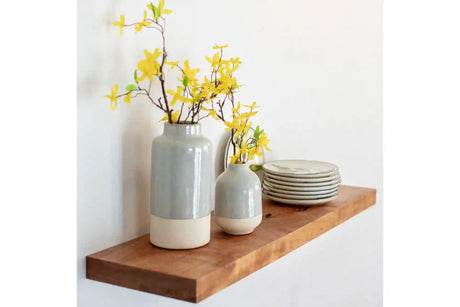
A row of walnut floating shelves above a kitchen counter looks nothing like a row of flat-panel cabinet doors. The grain, the warmth, the texture of solid hardwood adds something to the room that painted MDF never will.
White oak is the most popular species for kitchens. The tight grain is warm and neutral, and it pairs with almost any countertop and backsplash combination. Maple runs lighter and works well in brighter kitchens. Cherry adds warmth that deepens over time.

If you're not sure which species matches your kitchen, order samples and hold them against your backsplash in the room's actual lighting. That's worth more than any product photo.
9. They Handle Real Kitchen Weight
This is the reason people hesitate, and it's the reason I build what I build. Most floating shelves on the market top out at 30 to 50 lbs. That's not enough for a full set of dinner plates, a stack of bowls, and a few cookbooks.
Every shelf I build uses the Hovr bracket, which holds 150 lbs per stud. A 36" shelf on two studs gives you 300 lbs of capacity. You can load it with cast iron, stoneware, a stand mixer, whatever. No sag, no slow tilt forward, no waking up one morning to find your dishes on the floor. My post on what causes shelves to sag explains the bracket difference in detail.

For kitchens where the shelves are doing real work (holding heavy dishes, appliances, full pantry inventory), heavy duty wall shelves with the Hovr system are non-negotiable.
10. They Fit Spaces Cabinets Can't
That weird 14" gap between the window and the corner? A cabinet won't fit there. A custom sized to your wall floating shelf will. The narrow strip above the range hood? Same thing. The dead wall between the fridge and the doorframe? Done.
I cut every shelf to exact specs between 12" and 72" long and 6" to 12" deep. If the wall has space, I can fill it. And for kitchens with awkward layouts, corner shelves turn dead corner wall space into functional storage without a bulky lazy susan.
11. The Coffee Station Becomes Its Own Thing
A section of counter with two floating shelves above it becomes a dedicated coffee bar. Mugs on the bottom shelf, beans and equipment on top, and suddenly the morning routine has its own zone instead of competing with the toaster and the fruit bowl for counter space.
If the coffee station is an extension of the kitchen layout, matching the shelf species to the rest of the kitchen shelving ties it together. Or use a contrasting species to set the coffee bar apart as its own moment. Either way, coffee bar shelves are one of the most requested kitchen-adjacent setups I build.
12. They Work Under Lighting (and Can Include It)
Open shelving under pendant lights or recessed cans looks intentional. The light hits the objects on the shelf, the wood grain picks up warmth, and the whole wall reads as a design feature rather than storage. Cabinets block that light and create shadows.
For an even bigger impact, LED strip lighting routed into the underside of the shelf puts clean accent light on the counter below. I route the channel directly into the wood for $50 per shelf. No adhesive strips, no visible hardware. It's subtle, but it's the kind of detail that makes a kitchen feel finished.
Depth and Sizing for Kitchen Shelves
For dishes and bowls: 10" to 12" deep. A standard dinner plate is about 10.5" in diameter, so 12" gives you clearance. For spices and mugs: 8" is plenty. For pantry items and appliances: 12".
Check the depth guide for a full breakdown by use case.
Width should match the wall section you're filling. I build everything to your exact measurements, so you're not stuck choosing between 24" and 36" from a dropdown and hoping one looks right.
If you've been thinking about making the switch, start small. Two shelves on one wall. Live with it for a month. You'll wonder why you waited. Browse the full kitchen floating shelves collection to see all seven species and start picking your sizes.






1 comment
Great post! Floating shelves look amazing and so practical! https://hoodsly.com/