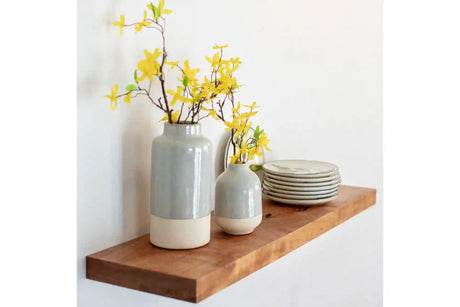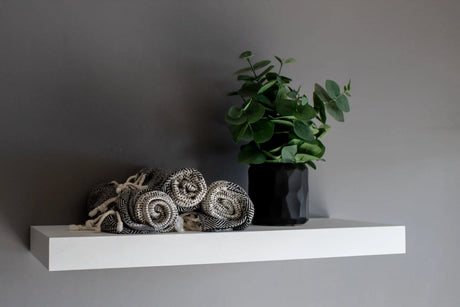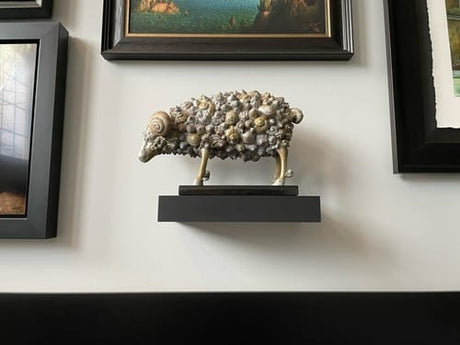

The living room is the most-seen room in your home. It's where guests land, where the family gathers, and where your design choices are on full display every single day. So when you add floating shelves to this space, they need to pull double duty: functional enough to hold real items and good-looking enough to earn their spot on the wall.
I've built floating shelves for hundreds of living rooms over the years, and the setups that work best always start with one question: where on the wall are they going? The answer shapes everything, from the size and depth to how you style them once they're up.
Ready to browse options? Shop the full living room floating shelves collection.
Above the Sofa

This is the most popular living room placement by far, and for good reason. The wall above a sofa is usually the largest blank space in the room, and it's the first thing people see when they walk in.
For a single shelf above the sofa, I recommend 48" to 58" long and 8" to 10" deep. That gives you enough surface for a mix of framed photos, a small plant or two, and a few decorative objects without the shelf projecting too far into the room. Keep the bottom of the shelf about 8" to 12" above the top of the sofa back so nothing gets bumped when someone leans back or tosses a pillow.
A stacked pair of shelves (one at about 10" above the sofa, the second 12" to 14" above the first) gives you more display area while creating a layered, intentional look. Run them the same length for symmetry, or offset the top shelf slightly shorter for a more relaxed feel.
One thing I see people get wrong: going too small. A 24" shelf centered above a 90" sofa looks like an afterthought. The shelf should cover at least half to two-thirds of the sofa's width to feel proportional.
Around the TV

If you're tired of a bulky entertainment center eating up floor space, floating shelves are the fix. A few shelves flanking a wall-mounted TV replace an entire piece of furniture while making the room feel bigger and cleaner.
The typical setup: mount the TV, then add two or three shelves below it for a soundbar, streaming devices, and game consoles. Shelves on either side of the TV handle speakers, books, plants, or decorative objects. For electronics, go 10" to 12" deep so nothing hangs over the edge.
You can line the shelves up symmetrically on both sides for a structured, built-in look. Or stagger them at different heights for something more casual. Both work; it depends on the vibe of your room.
Weight is worth mentioning here. A turntable, a stack of vinyl records, and a pair of bookshelf speakers can add up fast. That's why every shelf I build ships with the Hovr Bracket System rated at 150 pounds per stud. You can load these up without thinking twice.
For a deeper dive on entertainment center setups, check out floating TV shelves for an amazing entertainment center.

Flanking a Fireplace

Shelves on either side of a fireplace fill wall space that usually sits empty while creating symmetry around the room's natural focal point. This setup works especially well if you already have a mantel and want the surrounding wall to feel finished rather than bare.
The shelves don't have to be long here. 24" to 36" on each side is usually plenty, depending on how much wall you have between the fireplace and the corner. Stack two or three on each side at matching heights for a balanced look. Books, candles, framed photos, and small plants all work well in this spot.
If you're coordinating with a mantel, matching the wood species ties the whole wall together. I build mantels in walnut and white oak, both of which pair naturally with floating shelves in the same wood.
The Gallery Wall Alternative
Here's a trick that saves you from putting 30 nail holes in your wall: instead of hanging a dozen individual frames, run two or three floating shelves and lean your art and photos against the wall on each one.
This works best at 8" deep, which gives frames enough surface to lean without sliding off. You can overlap frames slightly, layer smaller ones in front of larger ones, and rearrange everything without picking up a drill. Swap out a print, add a new photo, rotate seasonal pieces; the shelves stay put while the display evolves.
It's also a great solution if you're renting or just don't want to commit to a permanent arrangement. The shelves themselves only need a few screw holes (into studs), and everything on them is completely flexible.
Filling Awkward Walls
Every living room has at least one weird wall: the narrow strip between a doorway and a corner, the space above a radiator, the short wall at the end of a hallway that opens into the living room. These spots are too small for furniture and too visible to leave blank.
A shorter shelf (18" to 30") turns dead wall space into a display area. A single shelf with a plant, a candle, and one framed photo is enough to make the space feel intentional. You don't need to fill every inch; sometimes one small shelf does more for a room than a gallery wall would.
Choosing the Right Wood for Your Living Room
The wood species sets the tone. Here's how I think about each one in a living room context:
White oak is the most versatile. Its warm, neutral grain works with almost any color palette, from all-white modern spaces to earthy, layered rooms. It's my most requested wood for living rooms and kitchens alike. See all sizes in the white oak floating shelves collection.
Walnut creates contrast. The dark grain pops against lighter walls and draws the eye. If you want the shelves to be a statement piece rather than a backdrop, walnut is the move.
Maple keeps things light and clean. The pale, consistent grain reads as modern and minimal. It works especially well in Scandinavian-inspired spaces or rooms with a lot of natural light.
Cherry adds warmth that evolves. It starts as a soft pinkish-brown and deepens into a rich reddish tone over time. For a living room you want to feel cozy and layered, cherry brings something no other wood can.
Live edge walnut makes a statement all on its own. The natural, unfinished edge adds organic texture and visual interest that works in both modern and rustic living rooms.
Painted white or painted black shelves blend with matching walls or create clean contrast. These are the best choice when you want the objects on the shelf to be the focal point, not the shelf itself.
If you're styling a specifically modern living room, the species choice gets more nuanced. Different versions of modern call for different species, and the wrong wood can undo the whole aesthetic. The full breakdown is in three versions of modern.
Styling Tips That Actually Work
I've seen a lot of living room shelf setups, and the ones that look best follow a few simple patterns:
Mix heights across the shelf. Alternate taller items (a vase, a framed print) with shorter ones (a candle, a small succulent). This creates visual rhythm without looking cluttered.
Group items in threes. A small plant, a framed photo, and a decorative object makes a natural grouping. Odd numbers read better to the eye than even numbers.
Leave space between groups. Don't fill every square inch of the shelf surface. Breathing room between clusters makes the whole display look intentional rather than crammed.
Layer frames on deeper shelves. On a 10" shelf, lean a larger frame in the back and a smaller one in front, slightly overlapping. This adds depth and makes the shelf feel curated instead of flat.
Rotate with the seasons. You don't have to restyle the entire shelf. Swap one or two items each season: a dried eucalyptus bundle in winter, a small vase of fresh flowers in spring. The shelves stay the same; the personality shifts.
LED Lighting for Living Room Shelves

Under-shelf LED lighting adds ambient warmth that transforms a living room in the evening. I route a channel into the underside of the shelf for LED strip lights, plus drill a hole through the back for wiring. It's $50 per shelf and works especially well above a TV setup, behind a sofa, or on shelves flanking a fireplace.
The warm tone of white oak and walnut picks up LED light beautifully without washing out. Mention LED routing in your order notes or email me after placing your order.
What Size Do You Need?
Every shelf is made to order between 12" and 72" long and 6" to 12" deep. For most living room setups, 8" to 10" deep is the sweet spot. If you're using shelves for electronics or heavy books, go 12". I break down all the depth recommendations in the floating shelf depth guide.
Order the closest size on the product page and put your exact dimensions in the order notes on the cart page. Need something longer than 58" or a custom depth? Reach out directly and I'll make it work.
Ready to Get Started?
Your living room walls are too visible to leave empty and too important to fill with cheap shelves that sag in six months. Solid hardwood with the Hovr bracket at 150 pounds per stud means you can load these up with whatever tells your story, and they'll stay put for decades.
Shop the full living room floating shelves collection in seven hardwood species with free shipping. Every shelf is handmade, backed by a lifetime guarantee, and built to hold whatever you want on display.