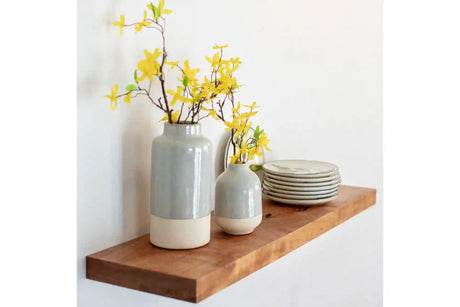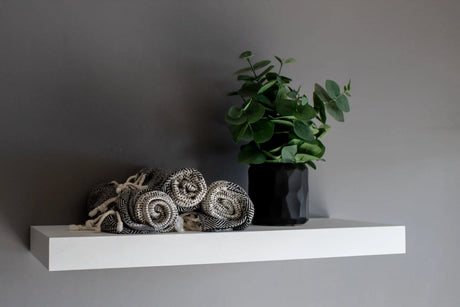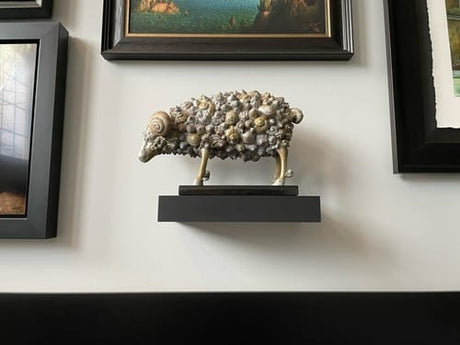

When people buy floating shelves, they usually focus on style and strength: what species to choose, what size fits the wall, or how much weight the shelf can hold. But there's a question that comes up after the shelf is on the wall and loaded up: "How do I keep this thing looking like it did on day one?"
The short answer is that floating wood shelves don't ask for much. Every non-painted shelf I send out is finished with a durable oil-based urethane. That finish is your first line of defense against scratches, spills, and everyday wear. But like anything in your home, a little care goes a long way. Here's what you need to know.

Regular Cleaning
Day-to-day maintenance is simple. Dust your shelves regularly with a soft cloth or microfiber duster. For deeper cleaning, a damp cloth works fine, just make sure it's wrung out so you're not leaving standing water on the wood. This matters most for shelves in a bathroom, where steam and moisture are part of daily life.
Homeowners in humid coastal cities like Miami and Charleston treat surface cleaning as just one layer of a bigger indoor maintenance routine because moisture in the air settles into every corner of a home, those in high pollution urban markets like Los Angeles and Chicago pair regular dusting with air quality management to keep fine particles from resettling on freshly cleaned surfaces almost immediately, families in cold climate cities like Minneapolis and Detroit find that sealed indoor air during long winters makes interior dust and allergen buildup far worse without proper ventilation care, and right here in the desert where fine sand and dust cycle through homes constantly, pairing your regular shelf and surface cleaning routine with air duct cleaning across Las Vegas ensures that what you just wiped down stays clean longer because the air circulating through your home is not simply redepositing dust the moment you put the cloth away.
Skip the harsh chemical cleaners. Products with ammonia or abrasives can dull the urethane finish or leave streaks. A gentle wood cleaner, or even just warm water with a drop of mild soap, is all you need.
I also recommend giving them an occasional wipe down with a furniture polish like Howard's Feed-N-Wax to keep the wood looking rich and conditioned. It takes about two minutes per shelf and the difference is noticeable.
If you're using your kitchen shelves daily (sliding plates, setting down mugs, moving jars around), put felt pads or coasters under anything that gets moved frequently. It sounds fussy, but a 30-cent felt pad prevents the kind of micro-scratches that add up over a couple years of daily use.
Protecting Against Damage
The Hovr bracket isn't going to sag, so structural worry is off the table. The surface is where care matters. These shelves are built by hand from solid hardwood, not veneer over MDF, so they're tougher than most alternatives. But wood is still wood, and it appreciates some common sense.
Plants are great on shelves but planters leak. A saucer or tray underneath catches the water before it pools on the finish. I've seen shelves come back for refinishing with a perfect ring where a plant pot sat for a year. A $3 tray prevents that entirely.
Candles and hot mugs can leave marks too. Coasters aren't just for coffee tables. If a candle is burning directly on the wood surface, the heat discolors the finish over time. Use a small tray or plate underneath and the problem disappears.

For painted white and black shelves, the 2K painted finish is more forgiving than you'd expect. It doesn't chip the way painted MDF does. But it's still worth using trays under plants and keeping sharp or abrasive objects from dragging across the surface.
Refinishing Non-Painted Shelves
If your shelf picks up a scratch or a scuff, here's the good news: an oil-based urethane finish can be refreshed. Light sanding with 220-grit sandpaper over the affected area, followed by a coat of General Finishes Arm-R-Seal, brings the surface right back.
That's the advantage of a clear finish on solid wood. You're not hiding anything. You're protecting and enhancing the natural grain. So when life happens (a dropped mug, a kid with a toy car, the cat deciding the shelf is a runway), the fix is sandpaper and a brush, not a replacement shelf.
For the full rundown on which finishes ship on which species, check out the finishes I use. Walnut, white oak, and cherry all come with the oil-based urethane as the standard option. Live edge gets the same treatment. The finish is consistent across species, so the care instructions are too.
A Note About Stained Shelves
If your shelf has been stained (currently available on white oak in any Minwax or Varathane color), you'll want to be a little more careful with refinishing. The stain sits underneath the urethane, so sanding too aggressively can cut through the clear coat and into the color.

For spot repairs, sand lightly with 320-grit, just enough to smooth the scratch without cutting into the stain layer. Apply a thin coat of urethane over the spot and let it cure fully before putting anything back on the shelf.
For stained shelves, prevention does more than repair. Felt pads, coasters, and trays save you from needing touch-ups in the first place. It takes less effort to protect the finish than to fix it.
Not sure which finish or stain is right for your space? Order samples and see the actual color in your actual lighting before committing.
The Long Game
Floating shelves should be a permanent part of your home, not something you're swapping out every few years. That's why I use finishes that look good on day one and can be refreshed down the road. It's also why every shelf ships with the Shelf Expression Promise: a lifetime guarantee against warping and cracking, plus a sag-free guarantee backed by the Hovr bracket at 300 lbs.
Take Care of the Shelf and It Takes Care of Itself
A little dusting, some common sense with water and heat, and an occasional coat of Feed-N-Wax. That's the whole maintenance routine. If a scratch happens, sand it, seal it, move on. These are solid hardwood floating shelves that are built to last decades, not decoration that needs to be babied. Treat them like the furniture they are and they'll hold up better than anything else on the wall.