
Three Versions of Modern: A Floating Shelf Guide for Mid-Century, Minimalist, and Contemporary Living Rooms
Modern living rooms are about restraint. Wrong shelf undoes the whole room. Most floating shelves on the market read as too rustic, too cheap, or too fussy for a modern aesthetic, which is why so many otherwise-thoughtful living rooms end up with a blank wall above the sofa or, worse, a generic shelf that fights everything around it.
The trick is that "modern" isn't actually one thing. It splits into three sub-styles, and the shelf that nails one looks ridiculous in the others. Drop a chunky walnut beam into a minimalist Scandinavian space and the whole room starts to look like it's apologizing. Put a painted black contemporary shelf in a 1960s-inspired room and you've just murdered the warmth that took six months of furniture shopping to build.
This guide breaks down what "modern" actually means in 2026, which floating shelves work in each version of it, where to place them in a living room, and the mistakes that turn good shelves into bad design. Every shelf I make ships from my modern floating shelves collection, custom sized in seven wood species, with the Hovr Bracket System at 150 pounds per stud.
What Counts as a Modern Living Room
"Modern" gets used as a catchall for anything that isn't traditional, but in interior design it specifically breaks down into three sub-styles that each treat floating shelves differently.
Mid-century modern pulls from 1950s and 1960s design. Warm woods (walnut especially), organic shapes, low-profile furniture, and a deliberate mix of natural materials. Think Eames lounge chairs, low credenzas, tapered legs, and shelves that complement the warmth of the wood elsewhere in the room.
Minimalist and Scandinavian is the lighter, brighter version of modern. Light woods like maple and white oak, painted-white surfaces, pared-back styling, and the principle that what you leave off the shelf matters more than what you put on it. Scandinavian specifically leans into hygge: warm light, soft textures, and a sense of calm.

Contemporary is the current-trend version of modern. Mixed materials, sharper contrast, sometimes painted black against light walls, asymmetric placement, and a willingness to mix wood with metal or stone. Contemporary moves faster than the other two. What was contemporary in 2020 already looks dated in 2026, which is either fun or exhausting depending on how often you want to redo your living room.
Knowing which version of modern you're working with is the first decision before you order anything.
Mid-Century Modern Floating Shelves
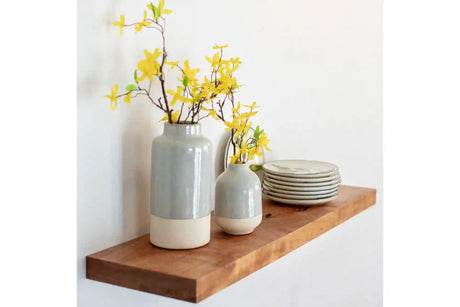
If you're going for mid-century modern, walnut is the signature wood. The deep brown grain, the natural variation, the way it ages with light: every defining mid-century interior used walnut for a reason. A mid-century modern living room without walnut somewhere in the room rarely lands the look.
For floating shelves specifically, mid-century modern wants horizontal emphasis. Long shelves, low to the wall, that create visual lines pulling the eye across the room rather than up. A 48" to 72" run of walnut floating shelves above a credenza or behind a sofa reads as intentional and architectural. Anything shorter than 36" in a mid-century room tends to look like an afterthought.

Mid-century modern also rewards depth choices that read substantial without going chunky. 8" to 10" deep is the sweet spot. Deeper than that starts to feel transitional rather than modern. Thinner than 8" reads as too contemporary for a true mid-century setup.
For wall placement, the mid-century playbook is consistent: above a credenza or media console, flanking a fireplace with matching shelves on either side, or behind a sofa as a single long run. The shelf becomes part of the room's horizontal architecture rather than a standalone display piece.
What to avoid: chunky farmhouse-thick shelves (you're going for Eames, not Cracker Barrel), ornate edge profiles, painted finishes (the whole point of mid-century is the wood doing the talking), and visible brackets. The Hovr bracket hides inside the shelf for a reason. Exposed hardware on a mid-century shelf looks like wearing socks with sandals.
For long runs, browse long floating shelves for sizes up to 72". The 47" bracket I use on longer shelves spans at least three studs, so even a fully loaded 72" walnut shelf stays level without sag.
Minimalist and Scandinavian Floating Shelves
Minimalist living rooms operate on a different principle: the shelf is almost an excuse for the negative space around it. You're not displaying objects so much as framing emptiness with one or two carefully chosen pieces. The shelf needs to recede into the wall, not announce itself.
For this aesthetic, white oak floating shelves and maple floating shelves are the go-to species. Pale grain, tight figure, nothing busy or distracting. White oak skews slightly warmer; maple is the cleanest and lightest of the two. Both work, and the choice between them often comes down to what else is in the room.
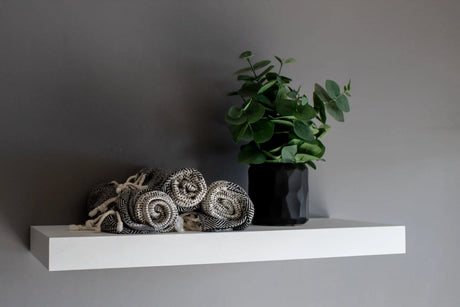
Scandinavian-influenced rooms often add painted white shelves to the mix. A painted-white floating shelf against a white wall almost disappears, leaving only the objects on it visible. This is the move when you want the shelf to be invisible and the styling to do all the work.

Sizing for minimalist rooms goes lean. 6" to 8" depth keeps the profile slim and lets the wall breathe. Lengths run shorter than mid-century: 24" to 48" is the sweet spot, often as single installations rather than matched pairs. One shelf, well-placed, beats three competing for attention.
Modern floating wall shelves in a minimalist room work especially well above a low sofa or armchair, where a single thin horizontal line creates structure without weight. The wall around the shelf does as much work as the shelf itself.
What to avoid: dark woods that pull focus, ornate styling that fights the grain, vertical shelf stacks (minimalism's nemesis is the gallery wall energy of too many shelves), and shelves that are too long for the wall. Over-scale shelves in a minimalist room are like loud talkers at a yoga class. The whole vibe collapses.
Contemporary Floating Shelves
Contemporary is where the rules loosen. Mixed materials, asymmetric placement, bolder color contrast, and a willingness to break with the warm-wood-only conventions of the other two sub-styles.
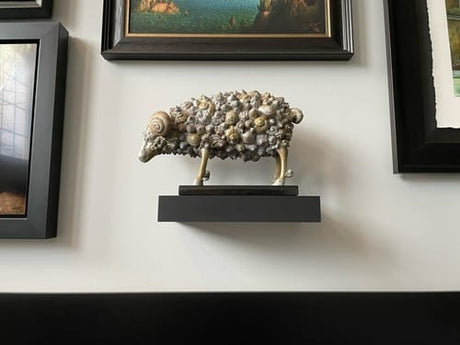
For contemporary living rooms, painted black shelves against a light wall create the most graphic, modern look in the lineup. The contrast is sharp, the edges read as architectural, and the shelf becomes a visual element rather than a neutral display surface. Modern black floating shelves work especially well in rooms that already have black hardware, frames, or accent pieces tying the look together.

Modern white floating shelves do the opposite: they blend into light walls and let the styled objects on the shelf carry the visual weight. Both painted finishes use solid maple under a 2K painted topcoat, so the structure is identical to a natural wood shelf. The finish just changes how the shelf reads in the room.
For wood contemporary setups, walnut and white oak both work, but the placement and styling matter more than the species choice. Contemporary rooms reward asymmetry: a single long shelf offset from the wall's center, a pair of shelves at different heights rather than matched, a vertical stack of three rather than two side by side.
Television placement is the most common contemporary application. Floating shelves flanking a wall-mounted TV at different heights create asymmetric balance without competing with the screen. A shelf above the TV combined with floating shelves above the couch on the opposite wall builds an integrated wall composition. Or, in less precious terms, two walls talking to each other instead of staring at the floor.
Modern corner floating shelves are worth mentioning here too. Contemporary living rooms often have dead corners that traditional design ignores entirely. Two shelves butted together in an L formation, or staggered at different heights on adjacent walls, turn an unused corner into a display moment. The Hovr bracket slides on the hardware so both shelves push tight into the corner for a seamless joint.

Where to Place Modern Floating Shelves in a Living Room
Four placement scenarios cover most modern living rooms.
Above the sofa. A single shelf 48" to 60" long, mounted 10" to 14" above the top of the sofa back, creates an immediate focal point. Depth depends on the sub-style: 6" to 8" for minimalist, 8" to 10" for mid-century or contemporary. The shelf should run roughly the width of the sofa or slightly shorter, never wider.

Flanking a fireplace. Modern floating shelves next to a fireplace work in matched pairs at the same height on either side, or as a single shelf above the mantel. Mid-century setups especially favor the flanking pair: it creates symmetry that ties the fireplace into the broader horizontal architecture of the room. For a fully integrated fireplace wall, the floating fireplace shelves collection covers sizing and species options specific to fireplace installations.
Above or beside the TV. Contemporary rooms reward asymmetric TV wall setups. A shelf above the TV plus offset shelves to one side creates the layered, intentional look that defines current modern design. Avoid centering shelves directly above and below the TV: that creates a too-balanced "trophy display" effect that reads as dated.
Over a credenza or media console. A long horizontal shelf above a low piece of furniture is the most classic mid-century modern application. The shelf and the credenza together create a strong horizontal band that anchors the entire wall.
Sizing for Modern Living Rooms
Three sizing rules cover most modern setups.
Depth: 6" to 8" reads as modern. 10" to 12" reads as more transitional or traditional. If you're going for a clean modern aesthetic, lean shallow.
Length: 48" to 72" for above-the-sofa, credenza, or fireplace flanking installations. 24" to 36" for solo display shelves or asymmetric contemporary setups.
Thickness: Every shelf I build is 1.8" thick solid hardwood. That's the modern sweet spot: substantial enough to read as architectural, slim enough to avoid the chunky farmhouse look. Thinner shelves on the market are typically veneered MDF and won't hold real weight without sagging.
For non-standard wall situations, custom floating shelves ship in any dimension from 6" to 12" deep and 12" to 72" long. Order the closest standard size and add exact dimensions in the order notes on the cart page.
Common Mistakes in Modern Living Room Shelf Setups
The five mistakes I see most often when people get modern floating shelves wrong.
Wrong species for the sub-style. Walnut in a minimalist Scandinavian room is like serving steak at a kombucha bar. Maple in a true mid-century setup reads as too cold for the warmth the style requires. Match the species to the version of modern you're actually building.
Going too small. A 24" shelf on a wall that wants 60" looks like you gave up halfway through deciding. Modern design rewards proportion: the shelf should feel related to the surrounding furniture and architecture, not floating in unrelated space.
Cluttering the shelf. Modern aesthetics depend on negative space. Three carefully chosen objects beat ten competing ones. If your shelf looks like a flea market booth, the calm clean room you wanted just became a yard sale with better lighting.
Wrong proportions to surrounding furniture. A shelf above an 84" sofa should run roughly 60" to 72", not 36". Eyes read shelves and the furniture below them as a single composition, and mismatched widths break that visual unit.
Visible brackets. Nothing kills a modern aesthetic faster than exposed hardware. The whole point of a floating shelf is the floating part. Cheap shelves with visible L-brackets or rod hardware undo the entire effect. The Hovr Bracket System ships hidden inside the shelf itself, with the male bracket mounting to the wall before the shelf locks on. Nothing visible after install.
For more on getting the proportions right, the floating shelf depth guide covers depth-by-room recommendations in detail.
Three Versions of Modern, One Shop
Three versions of modern, three different shelves. Walnut for mid-century. White oak, maple, or painted white for minimalist. Walnut, painted black, or painted white for contemporary. Pick wrong and the room never quite works. Pick right and you stop noticing the shelf entirely, which is exactly the goal.
Every shelf is custom sized, ships with the Hovr bracket at 150 pounds per stud, and comes with a lifetime guarantee against warping and cracking. Pick the sub-style, pick the species, measure the wall, and the rest is just an afternoon with a drill.