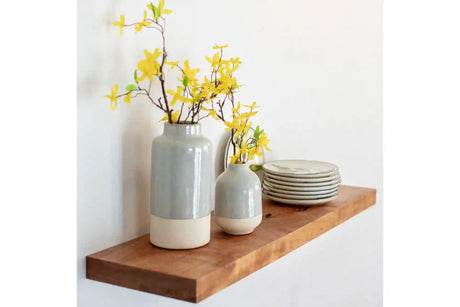
Live edge walnut is the most organic option in the lineup. The natural contour of the walnut slab runs along the front edge, giving each piece a profile that no two shelves share. The dark chocolate tones, natural figuring in the grain, and irregular live edge create exactly the kind of raw, natural character that rustic style is built around. Browse live edge floating shelves.
Walnut without the live edge still brings serious character through its dark grain and natural warmth. The rich brown tones work with exposed brick, stone, wood beams, and the warm neutrals that define rustic interiors. As the wood ages it deepens slightly, which suits a space meant to feel established rather than newly designed. Browse walnut floating shelves.
White oak reads as rustic in farmhouse, transitional, and modern farmhouse spaces where the aesthetic is warmer and more natural than strictly contemporary. The ray fleck patterning adds grain interest that suits the style, and it stains exceptionally well in warm brown tones if you want a darker, more weathered look. Browse white oak floating shelves.
Cherry brings natural character through time rather than immediately. It starts as a soft pinkish-brown and deepens into a rich amber patina over years of light exposure, a process that suits this aesthetic perfectly. A cherry shelf installed today looks noticeably different and richer five years from now. Browse cherry floating shelves.
Maple is the lightest species in the lineup and sits at the more neutral end of the spectrum. In a bright farmhouse kitchen or a whitewashed space, maple's pale tone reads as natural and warm without the heaviness of darker species. Browse maple floating shelves.
Not sure which species fits your space? Order samples and see the grain in your actual room.