This is one of the most common questions I get from kitchen customers: should I replace my upper cabinets with open shelving?
The short answer is that it depends on how you use your kitchen. Open shelving works best when you want easier access to everyday items, more natural light flowing through the space, and a kitchen that feels bigger and more inviting. Closed cabinets work better when you have a lot of items you'd rather keep hidden or you don't want to think about how things look on the shelf.
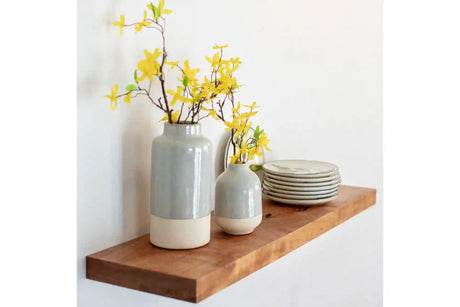
Most of my customers land somewhere in the middle. They keep cabinets for the cluttered stuff (Tupperware, that drawer full of takeout menus) and add floating shelves for the things they actually want to see and reach: dishes, glasses, cookbooks, and a few decorative pieces. That combination gives you the open, airy feel of open shelving without giving up all your hidden storage.
A few practical things to consider:
Dust and grease are real. Shelves near the stove will collect a thin film from cooking oils over time. Keep cooking-area shelves a little higher or offset from the burners, and stick to items that wipe down easily (ceramics, glass). I go into this honestly in the disadvantages of floating shelves.
Weight matters more with open shelving. When you're loading a shelf with a full set of dinner plates or heavy stoneware, you need a bracket system that won't sag. Standard 2-prong brackets top out at 50 pounds per stud. The Hovr Bracket System holds 150 pounds per stud, which means you can store your heaviest kitchen items without a second thought.
Every shelf ships sealed with a polyurethane topcoat that protects against moisture, grease, and daily wear. For kitchens specifically, I recommend 10" or 12" deep shelves in white oak or maple for the most versatile look, but all seven wood species hold up equally well in a kitchen environment.